|
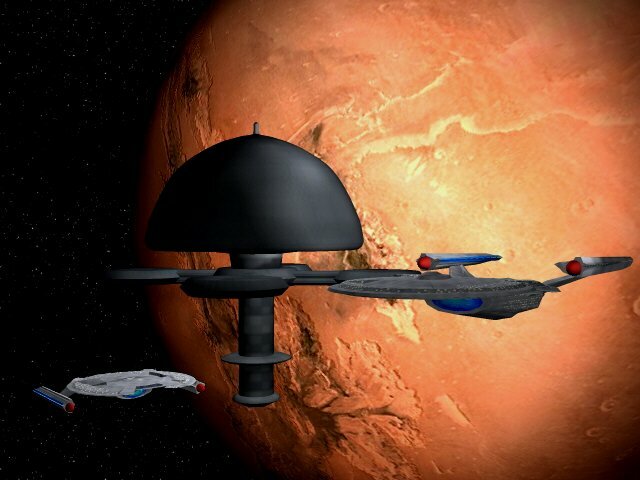
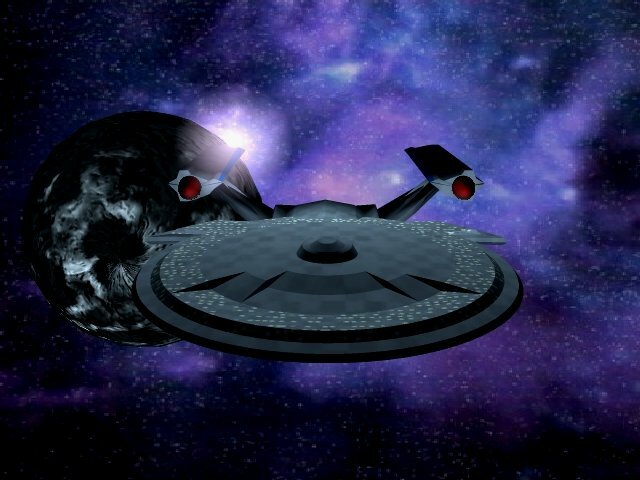
The Utopia Planitia Fleet Yards, located in a geosynchronous orbit of the planet Mars, is the largest and most Starfleet facility of this kind. Its mission: to construct new starships based on the project specifications, performance calculations and computer models submitted by the ASDB (Advanced Starship Design Bureaus), in order to explore space and protect the Federation. Having been at service for many decades, the Utopia Planitia Yards have been responsible for some of the most important and prominent starship classes - for instance the Galaxy class, the Defiant class and the Intrepid class - and has kept on putting revolutionary new ideas in starship design into practice. Some of these unique ideas which drove forward starship development are presented on this page in the form of existing, but never shown starship classes, along with their potential history and specifications.
Warnung: everything on this page is strictly uncanon!
| |
|

|
 |
 |
| Type |
Scout |
| Construction yards |
Utopia Planitia Fleet Yards, Mars |
| Operational phase |
as of 2350 |
| Prototype |
USS Chimera
[NX-57410] |
| Further vessels |
USS Portland
[NCC-57418] |
| |
|
| Dimensions |
Length 307.80m |
|
Width 317.03m |
|
Height 56.94m |
|
| Mass |
1.450 Mt |
| Deck count |
16 |
| Crew complement |
162 |
| Warp drive |
Warp engines with 2 Warp nacelles |
|
Maximum speed warp 8.8 (unlimited), warp 9.4 (12 h) |
| Impulse drive |
2 impulse engines |
| Armament |
Deflector shields |
|
5 phasers type VII |
|
2 pho-torp launchers |
|
|
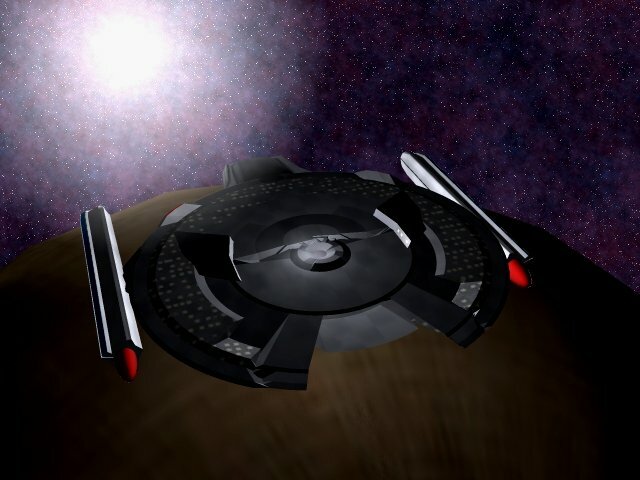
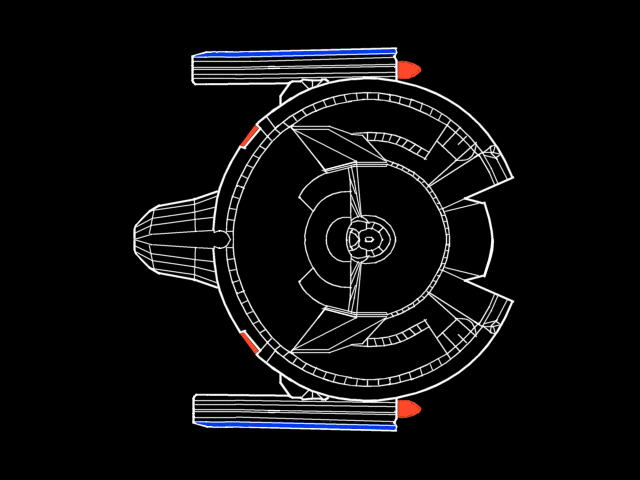
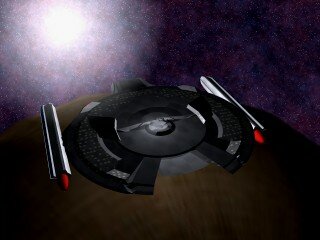
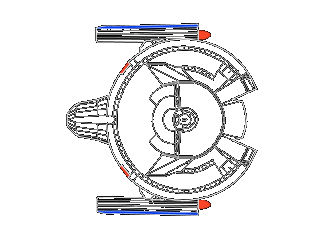
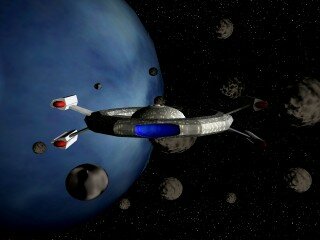
| The Chimera class introduced in the mid 24th century was one of the first starship classes of Starfleet to be particularly designed and constructed as a "scout", therefore being specially adjusted to the tasks reconaissance and undercover research. While Federation had mainly used Peregrine class courier ships or research ships during the long period of peace at the beginning of the 24th century due to the relative rarity of such missions, the significance and necessity of the obversation of enemy fleet movements and bases grew with the rapid deterioration of the relations to the Cardassian Union in the 2340s. It became obvious that the vessels previously used for this purpose wouldn't be up to these tasks in a war-like situation any longer, and instead, a compact, quick, but also powerful ship would be necessary. In 2345, these considerations and the following project requirements exactly worked out by the ASDB resulted in the beginning of the Chimera project, with the Utopia Planitia Fleet Yards being responsible for he construction. Although a non-propulsive base version of the prototype and the spaceframes of 6 additional vessels of the class were already avaiable 3 years late, the beginning of the Cardassian Wars in 2346 and the massacre of Setlik III in the following year showed that the project had been initiated too late. Therefore, from this moment the construction of the prototype was accelerated and additionally, it was decided to construct another four vessels of the class. Consequently, the USS Chimera, the first real scout ship of Starfleet, could be comissioned in 2350. Together with the 10 series vessels comissioned between 2351 and 2355, it did a good job for Starfleet during the Cardassian Wars. Although the Chimera class has been getting on in years and is inferior to the more modern starship classes like the Defiant class or Intrepid class in the meantime, the beginning of the conflict with the Dominion in late 2370 has shown that a compact and reliable scout is still needed by Starfleet. |
 |
 |
| |
| |
|

|
 |
 |
| Type |
Deep Space Explorer |
| Construction yards |
Utopia Planitia Fleet Yards, Mars |
| Operational phase |
as of 2351 |
| Prototype |
USS Zodiac
[NX-58011] |
| Further vessels |
USS Yorktown
[NCC-61137] |
| |
|
| Dimensions |
Length 131.24 |
|
Width 192.62m |
|
Height 47.21m |
|
| Mass |
1.125 Mt |
| Deck count |
12 |
| Crew complement |
130 |
| Warp drive |
Warp engines with 4 warp nacelles |
|
maximum speed warp 9.0 (unlimied), warp 9.2 (12 h) |
| Impulse drive |
2 impulse engines |
| Armament |
Deflector shields |
|
5 phasers type VII |
|
2 pho-torp launchers |
|
|
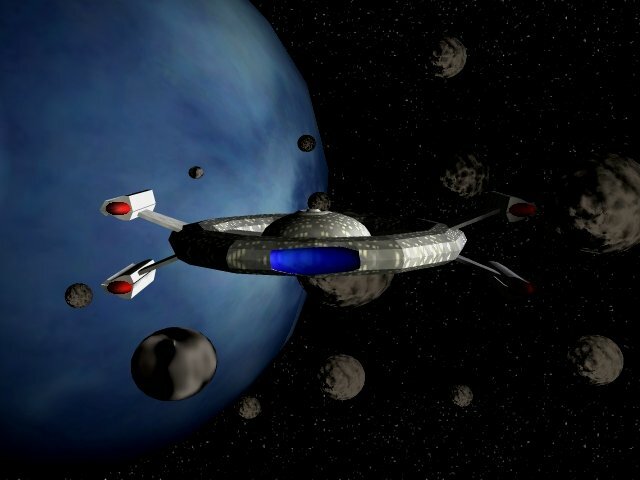
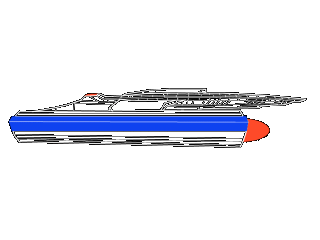
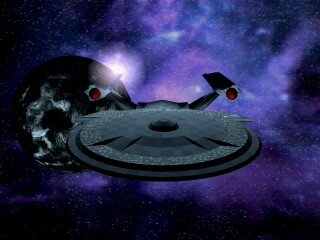
| The experimental Zodiac class used since the middle of the 24th century belongs, as well as the Olympic class, to one of the first projects of the Alternative Spacecraft Technologies group (AST) put into practice, being designed as a deep space explorer. Due to the restricted size, capacity and equipment of these ships, the class doesn't replace the rather old Constellation class vessels, but it sensibly supplements them by a armament which is very heavy for a deep space explorer and propulsion systems that are far superior to the Constellation class. Actually, the Zodiac class and the related technological developments already originated in the year 2340, when the Alternative Spacecraft Technologies group (AST) was set up by the ASDB in order to test new ways in starship design, that completely differ from the established classic starships with a round, flat saucer section and a primary section connected to its bottom, firstly by theoretical design studies and computer models, later by experimental prototypes. The Olympic, Zodiac and Cora projects were the first three projects intended to be probably used in active service some time. While the Olympic project, that was adjusted to supply missions, contained a spherical saucer design, which has proven with the Daedalus class in the 22th century, but seemed to be inapplicable for high-warp vessels, the Zodiac project was intented to have a toroid saucer section beside the rarely used double-pair configuration of the warp nacelles that is advantageous for deep space explorers, and the Cora project, an escort type, an elongated triangular saucer. Unfortunately, the latter project had be cancelled already in 2344 insurmountable problems with the warp field geometry, however, the prototype construction of the Olympic project could be started in the following year, and after many difficulties and the addition of an extended offensive potential to the specifications in 2346 due to the Cardassian threat, the construction of the Zodiac class prototype finally started in 2347. Having been built within 4 years in the Utopia Planitia Fleet Yards, the USS Zodiac was comissioned in 2351, which offered as a small, but technologically advanced deep space explorer, along with 2 additional ships of the class completed three years later, fascinating possibilities for the exploration of deep space. |
| |
| |
|

|
 |
 |
| Type |
Explorer |
| Construction yards |
Utopia Planitia Fleet Yards, Mars |
| Operational phase |
as of 2366 |
| Prototype |
USS Bradbury
[NX-72307] |
| Further vessels |
USS Hiram
[NCC-75928] |
| |
|
| Dimensions |
Length 474.88m |
|
Width 265.10m |
|
Height 92.21m |
|
| Mass |
3.075 Mt |
| Deck count |
22 |
| Crew complement |
420 |
| Warp drive |
Warp engines with 2 warp nacelles |
|
Maximum speed warp 9.6 (unlimited), warp 9.8 (12 h) |
| Impulse drive |
2 impulse engines |
| Armament |
Deflector shields |
|
7 phasers type X |
|
4 pho-torp launchers |
|
|
| The experimental Bradbury class prototype, completed in the mid 2360s, is the first Starfleet vessel at all that successfully puts into practice an elongated ellipictical saucer section, an angular-curved hybrid design and a on the whole very straightened appearance, which fairly differs from the established starship design with a round or horizontal elliptical saucer section. The middle-sized Bradbury class designed for research missions is therefore the direct predecessor of the smaller Intrepid class and the larger Sovereign class, that adapted the revolutionary new design of the Bradbury and specifically improved it. For a long time, actually a "Bradbury class" didn't exist, because firstly, only the experimental prototype, the USS Bradbury, was intended to be constructed, and this vessel remained the only ship of its class for many years. Although usually being more receptive to new technologies and designs, Starfleet's wariness with the Bradbury class was more than than justified, taking into account the long period of development of the relating specifications which date from the 2340s. At that time, a corresponding design was considered for the first time, however, due to the then understanding of warp field geometry, which for instance led to the very curved Galaxy class design, it was never put into practice. The first project of this kind, the Cora class, and all following projects failed because of these theoretical hurdles. Not until 2356 Starfleet succeeded in developing a propulsion model that would really enable a high-warp starship with such a design. In the same year, the Bradbury project was started that should check these new possibilities in starship design - a angular-curved, straightened hull. The models showed that this would result in numerous advantages, for instance a increased propulsion efficiency and therefore a maximum speed beyond warp 9.6, and indeed, the USS Bradbury, constructed from 2359-66 in the Utopia Planitia Fleet Yards, could more than fulfil the expectations. Nonetheless, series production was delayed in order to test the experimental prototype for some years in practical use and to intregate all obvious possibilites to improve the design into the Intrepid and Sovereign projects started at the beginning of the 2360s. However, after the new design has finally proven with these ships, and Starfleet's general need for quick and powerful ships since the conflict with the Dominion the series production started in 2370 and in the meantime, the first Bradbury class starship have left the drydock to keep the peace in the Federation and to explore the totality known as the universe. |
| |
| |
| Note: Click on any diagram or picture on this page (including the title picture) to get a full size view of it (640x480 pixels). |
| All starships shown on this page were developed by Christian Ruehl. It is strictly prohibited to use the text or the pictures (including the title picture) without the permission of the author! |
| |
|